Room study 02 · Walnut parquet
Living room floors that get better with age
The living room floor is the one you actually see: under the sofa, around the rug, in the low winter light. It should be the calmest decision in the room.
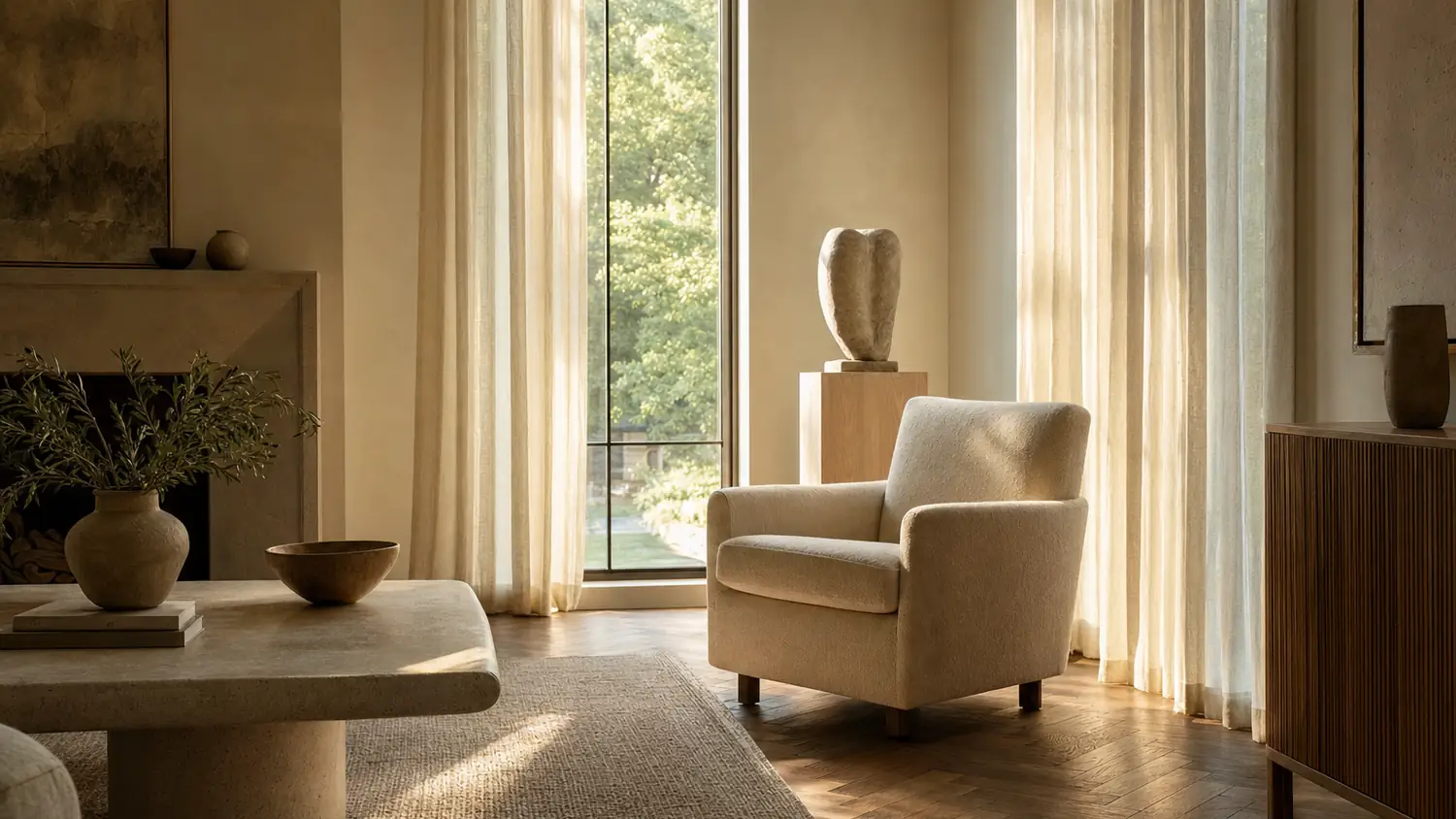
A living room is where the floor is asked to do two opposite things at once: carry the visual weight of the room and disappear under the life that happens on it. The floor that manages both is usually a mid-tone wood with a matte finish, laid in wide boards, and given a rug where people actually sit.
Why mid-tone wins
Very pale floors make a living room feel bright and slightly provisional, as if the furniture has not quite moved in. Very dark floors make it feel considered and, in a north-facing room, a little heavy by four o’clock. A mid-brown walnut or a honeyed oak sits between those extremes. It holds a shadow without going black and reflects enough light to keep the room open.
The finish matters as much as the color. A high-gloss floor doubles every window and turns a lamp into a glare. A matte or low-sheen oil finish absorbs the light softly and hides the small scuffs that come from a coffee table being moved to vacuum.
Wide boards, fewer lines
Board width changes the character of a room more than most people expect. Narrow strips read traditional and busy; wide planks read calm and contemporary. In a living room of ordinary size, a 7 inch plank is a comfortable middle: wide enough to feel generous, narrow enough not to dominate.
The direction of the boards matters too. Run them toward the main window and the room lengthens. Run them across and it widens. If the room is already long and narrow, run across the short axis and let the rug do the rest.
The rug is part of the floor decision
A wood floor in a living room is rarely seen in full. The seating area will sit on a rug, and the rug will determine whether the floor reads as a frame or as a stripe. A rug that stops short of the sofa makes the room feel smaller and the floor feel like a border. A rug that runs under the front legs of every seat makes the seating area a single piece of furniture.
Choose the floor as if the rug were part of it: a warm floor under a cool rug, or a dark floor under a pale one. The contrast is what makes the arrangement legible. Our guide to rug sizes works through the dimensions room by room.
Let it age
A living room floor is going to acquire a history. A sun-faded patch where the sofa used to be, a small dent from a chair leg, a ring where a plant was overwatered. Oil-finished wood can be spot-repaired and will darken gently; a lacquered floor is more uniform and less forgiving.
If you want a floor that looks the same in ten years, choose a engineered plank with a robust wear layer and a matte finish, and put felt pads under everything that moves. If you want a floor that looks better in ten years, choose a solid or engineered oak you can sand and refinish, and accept the small marks as part of the room.
The palette
- Walnut
- Linen
- Sand
- Terracotta
Four floors, one room. The textures are sharpened samples rather than photographs, so you are reading color and grain, not the styling around them.
The room above is an illustration, not a photograph of a client's home. Colors will vary with your light; always choose from a physical sample.
A note
Everything in this study is a starting point. Your subfloor, your light and your household will edit it.