Room study 01 · Wide-plank white oak
Kitchen flooring that stands up to a working room
The kitchen is the one room where the floor is a tool as much as a surface. Choose it for the work, then make it beautiful.
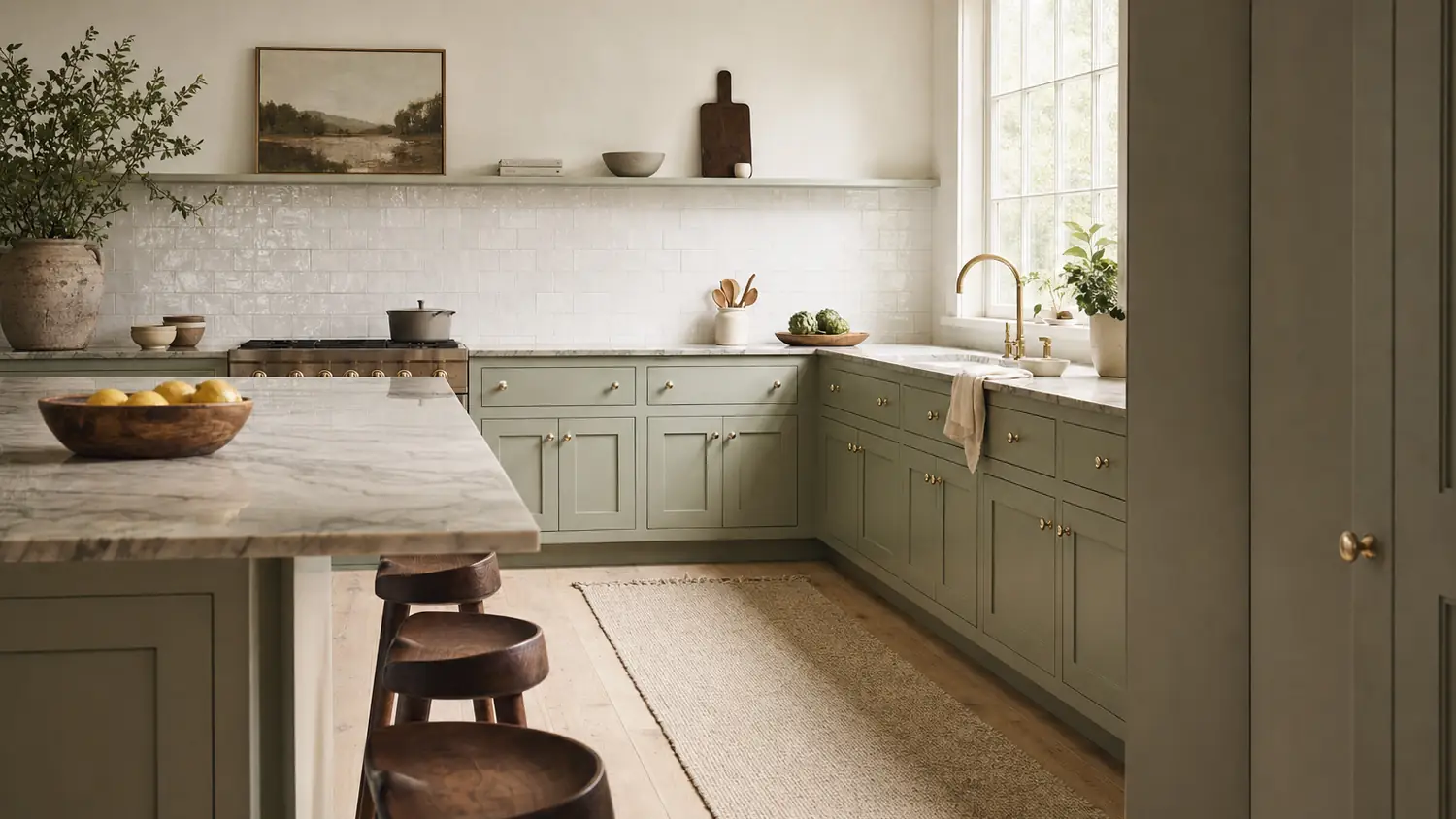
A kitchen floor takes more punishment in a week than a bedroom floor takes in a year. Water around the sink, a hot pan that misses the trivet, a chair dragged back from the table forty times a day. The floor that survives all of it and still looks calm beside sage cabinets is rarely the most expensive one. It is the one chosen for the work first.
Start with the water, not the color
Everything in a kitchen eventually gets wet. The question is what happens next. Solid hardwood and water are uneasy neighbors; a spill that sits overnight can lift a finish and darken the joint. Engineered wood behaves better if the core is stable and the edges are sealed, but it is still a wood floor with a wood floor’s worries.
Luxury vinyl plank has become the default answer for good reason. A rigid core does not swell at the seams, a spilled glass can be wiped up without drama, and the surface is quiet underfoot compared with tile. Choose a plank with a wear layer thick enough for a working room, and insist on a waterproof core rather than a water-resistant one. The words sound similar in a showroom and behave very differently under a leaking dishwasher.
Porcelain tile is the other honest answer. It is indifferent to water, easy to clean and cool underfoot, which is welcome in July and less so in January. A matte finish is worth the extra look: polished tile in a kitchen shows every footprint and becomes slippery with a little water.
Let the cabinets make the first move
Sage cabinets and a pale oak floor are a gentle pairing because neither is trying to be the loudest thing in the room. The green is chalky rather than sharp, the oak is warm rather than golden, and the pale stone counter sits between them like a sheet of paper.
If your cabinets are already installed, pull a door and take it to the floor samples. Green painted cabinets can turn a yellow-toned oak orange, and a cool gray plank can make the same green look minty. The correction is usually small: a slightly warmer plank, or a slightly grayer sage.
If the floor is fixed and the cabinets are still a decision, test the paint against the floor at the time of day you actually cook. A sage that looks soft at noon can go gray under a warm evening bulb.
Plan the edges before the field
The parts of a kitchen floor that fail first are the edges. A plank that butts into a cabinet toe kick without expansion room will tent in a humid summer. A threshold that sits proud of the tile will catch a toe every morning.
Decide the transition at the kitchen door early, especially if the adjacent room is wood. A flat, flush reducer reads as a single continuous floor; a raised strip reads as a border between two rooms. Both are legitimate. What is not legitimate is discovering the height difference after the flooring has been delivered.
Keep the quiet
A kitchen with sage cabinets and a pale oak floor does not need much else. One darker element, such as a slate backsplash or a blackened metal tap, gives the eye somewhere to rest. A runner in front of the sink softens the hardest-working two feet in the house and can be washed.
The floor should feel like the calm plane under all of it: warm, quiet, and unbothered by the next thing that falls on it.
The palette
- Pale oak
- Sage
- Chalk
- Slate
Four floors, one room. The textures are sharpened samples rather than photographs, so you are reading color and grain, not the styling around them.
The room above is an illustration, not a photograph of a client's home. Colors will vary with your light; always choose from a physical sample.
A note
Everything in this study is a starting point. Your subfloor, your light and your household will edit it.