Room study 04 · Matte porcelain tile
Bathroom floors that handle water without looking clinical
Water decides most of the bathroom floor. The remaining decisions are warmth, grip and how the grout lines make the room feel.
A bathroom floor has one non-negotiable job: it must not be damaged by water. Everything else — color, warmth, the size of the tile — is a choice you get to make after that. The good news is that the water-proof options have become genuinely beautiful, and the gap between a practical bathroom and a calm one has narrowed.
Porcelain, chosen carefully
Porcelain is the default for good reasons. It does not care about splashes, it is easy to clean, and it can imitate stone, concrete or even wood closely enough to fool the eye from a distance.
The specification that matters most is the finish. A polished porcelain tile in a bathroom is a liability: it looks wonderful in photographs and becomes treacherous with wet feet. Choose a matte or textured surface with a slip rating suitable for wet areas, and test it with a wet hand in the showroom before you commit.
Tile size changes the feel of the room. Large format tiles mean fewer grout lines, which makes a small bathroom feel bigger and calmer. Small mosaics are useful on a shower floor where grip and fall matter, but across a whole bathroom they add visual noise.
Warmth is a separate decision
Tile is cool. In a small bathroom that is pleasant in summer and bracing in February. Two practical answers: underfloor heating, which turns the whole floor into a warm plane, or a washable rug that can be lifted and laundered.
Underfloor heating adds height to the floor build-up and needs planning before the tile is laid. A rug is the flexible option, but it must be able to go in the washing machine; a bathroom rug that cannot be washed is a damp textile waiting to happen.
Grout is a design decision
Grout is the part of a tiled floor that changes first. A pale grout on a pale tile disappears and makes the floor read as one surface. A dark grout outlines every tile and turns the floor into a grid.
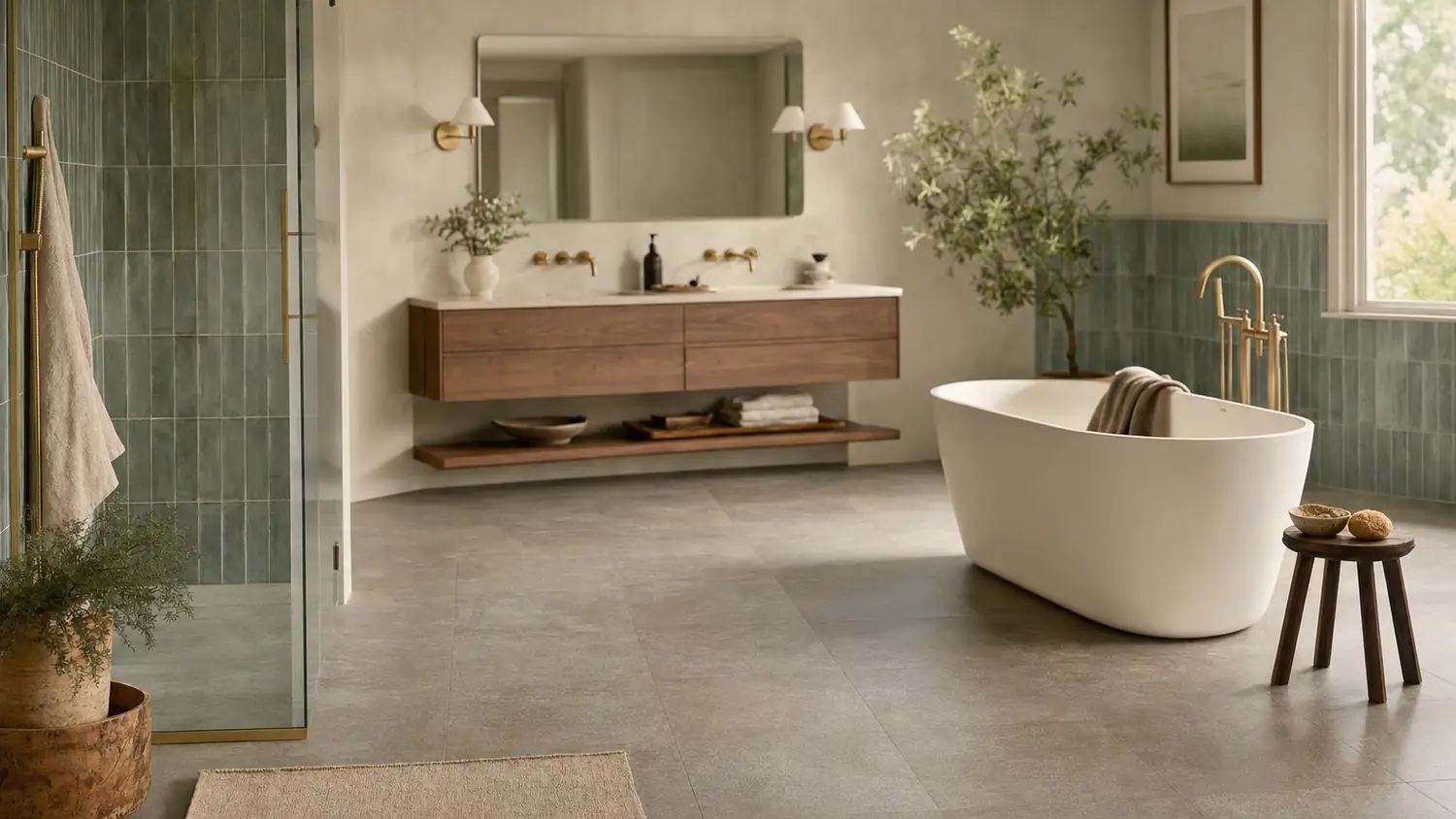
In a bathroom with sage glazed wall tile and brass fittings, a warm gray grout on a warm gray floor keeps the room quiet and lets the wall color lead. A white grout would have been brighter and harder; a black grout would have made the floor the loudest thing in the room.
Seal grout if the tile is porous, and choose a grout with a mould inhibitor in a wet room. It is a small cost that determines how the floor looks in five years.
Where wood can work
Sealed engineered wood can survive in a bathroom if the room is well ventilated, the floor is protected around the wet zones, and the manufacturer explicitly allows it. It is a considered risk rather than a default, and it rarely survives a house full of teenagers.
If you want the warmth of wood without the risk, a wood-look porcelain plank gives you the color and grain with none of the water anxiety. Choose one with a matte finish and a realistic grain, and keep the grout lines as tight as the tile allows.
The palette
- Warm gray
- Sage glaze
- Chalk
- Brass
Four floors, one room. The textures are sharpened samples rather than photographs, so you are reading color and grain, not the styling around them.
The room above is an illustration, not a photograph of a client's home. Colors will vary with your light; always choose from a physical sample.
A note
Everything in this study is a starting point. Your subfloor, your light and your household will edit it.