Style guide 04
Traditional rooms, freshly edited
Walnut floors, wool, a proper lamp and symmetry where it counts: how to keep traditional rooms warm without reproducing a museum or a hotel.
- Walnut
- Cream
- Sage
- Brass
- Clay red
Walnut, wool, a proper lamp, symmetry where it counts.
Traditional interiors are often treated as a period costume: swags, patterns, a lot of small objects. The rooms that actually feel traditional and livable are edited. They keep the proportions and the materials, and they lose the clutter.
Walnut, or a warm mid-brown
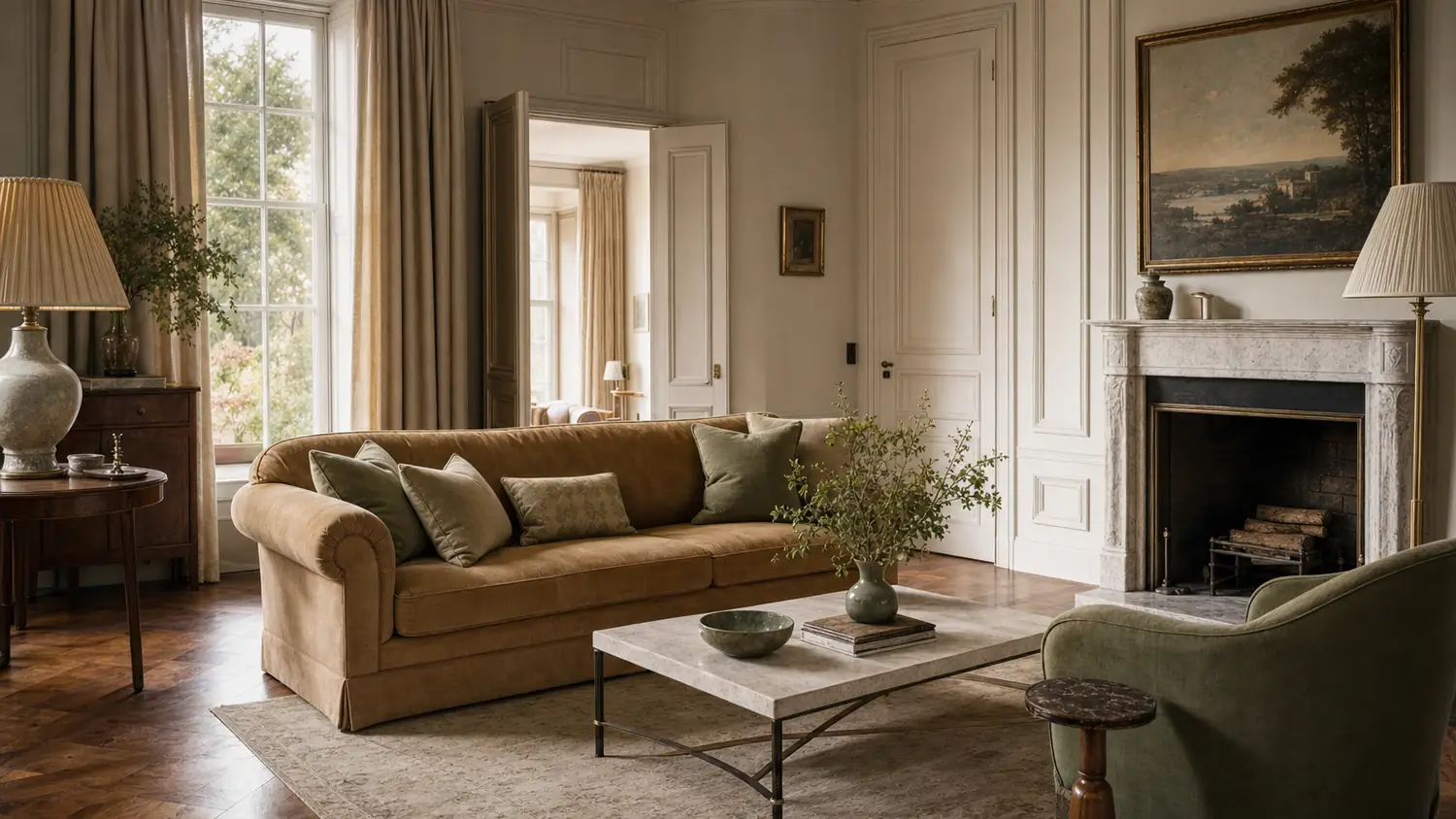
Traditional floors are darker than modern ones. Walnut, stained oak, parquet in a herringbone or basketweave. The color gives the room its weight and makes pale walls and upholstery look generous rather than empty.
If a dark floor feels too much, choose a mid-brown oak rather than a pale one. The point is contrast: light walls, mid-to-dark floor, furniture somewhere in between.
Parquet adds pattern underfoot. Use it in a room with plain walls and few objects; a parquet floor in a room full of pattern is exhausting. If the parquet already exists, let it be the decoration.
Symmetry, where it shows
Traditional rooms are symmetrical at the moments you notice: a pair of lamps on a sideboard, two chairs facing a fireplace, a bed centred on a wall. Between those moments, the room can be informal.
The mistake is applying symmetry everywhere. A perfectly mirrored room feels like a hotel. Pick one axis — the fireplace, the bed, the window — and let the rest of the room arrange itself around how you actually live.
Lamps, not downlights
Traditional light is layered and low. A table lamp beside a chair, a floor lamp behind a sofa, a pendant over a table. The light comes from the height at which people sit, which makes faces look better and rooms feel warmer.
If the ceiling has downlights, put them on a dimmer and use them for cleaning, not for evenings. A traditional room at night should have pools of light, not an even wash.
Fabric and one pattern
Wool, linen, velvet in small doses. Traditional rooms are tactile, and the fabrics are half the comfort. A wool rug, linen curtains, a velvet cushion.
Choose one pattern and repeat it once. A striped rug and a striped cushion, or a floral curtain and a floral seat. Two patterns in a room is plenty; three requires a professional eye.
Remove a third
The final move is subtraction. Take a third of the objects out of a traditional room and it will look more expensive, not less. The proportions, the floor and the light are doing the work; the objects are only there to make it habitable.
The gallery
Traditional, in four rooms
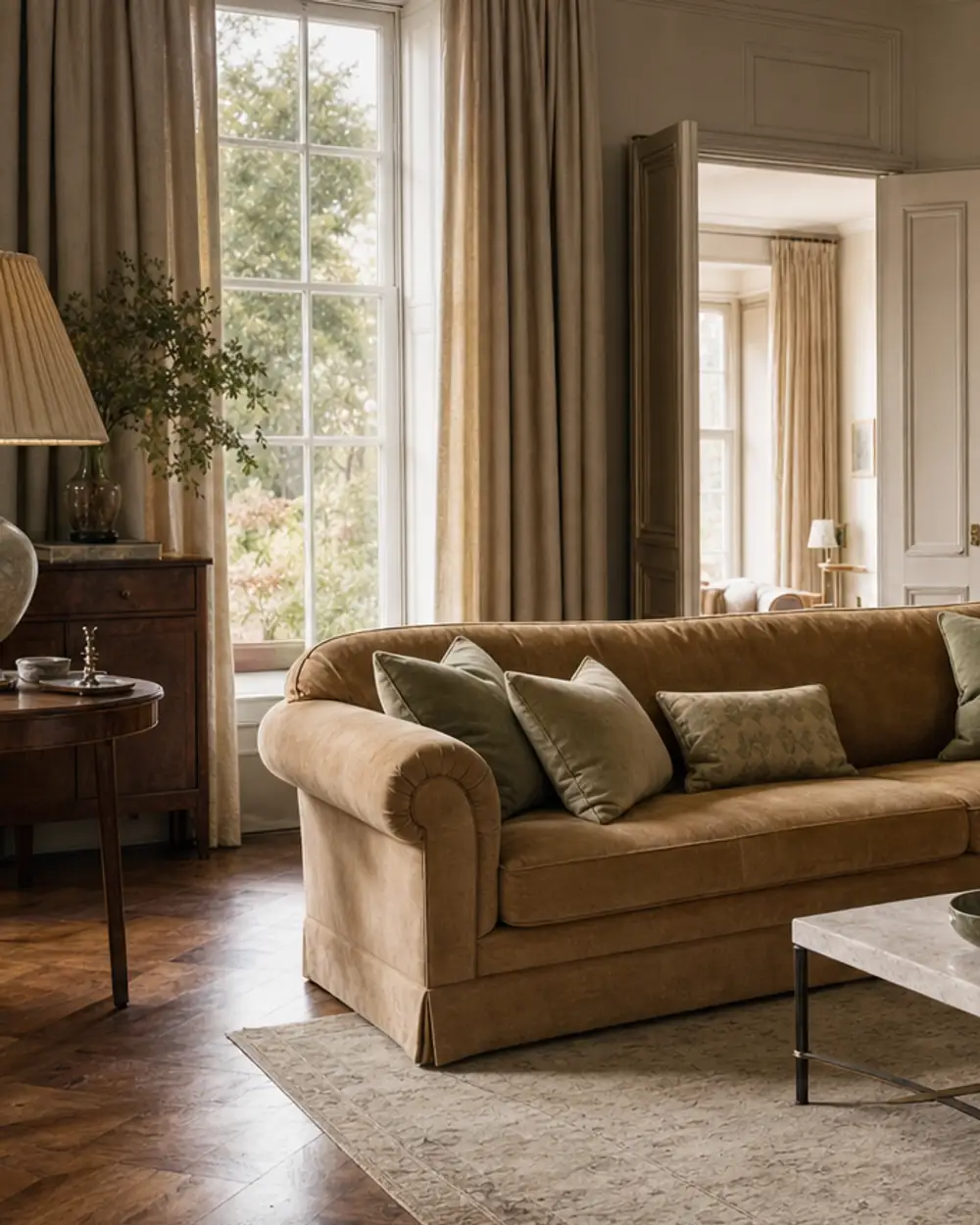
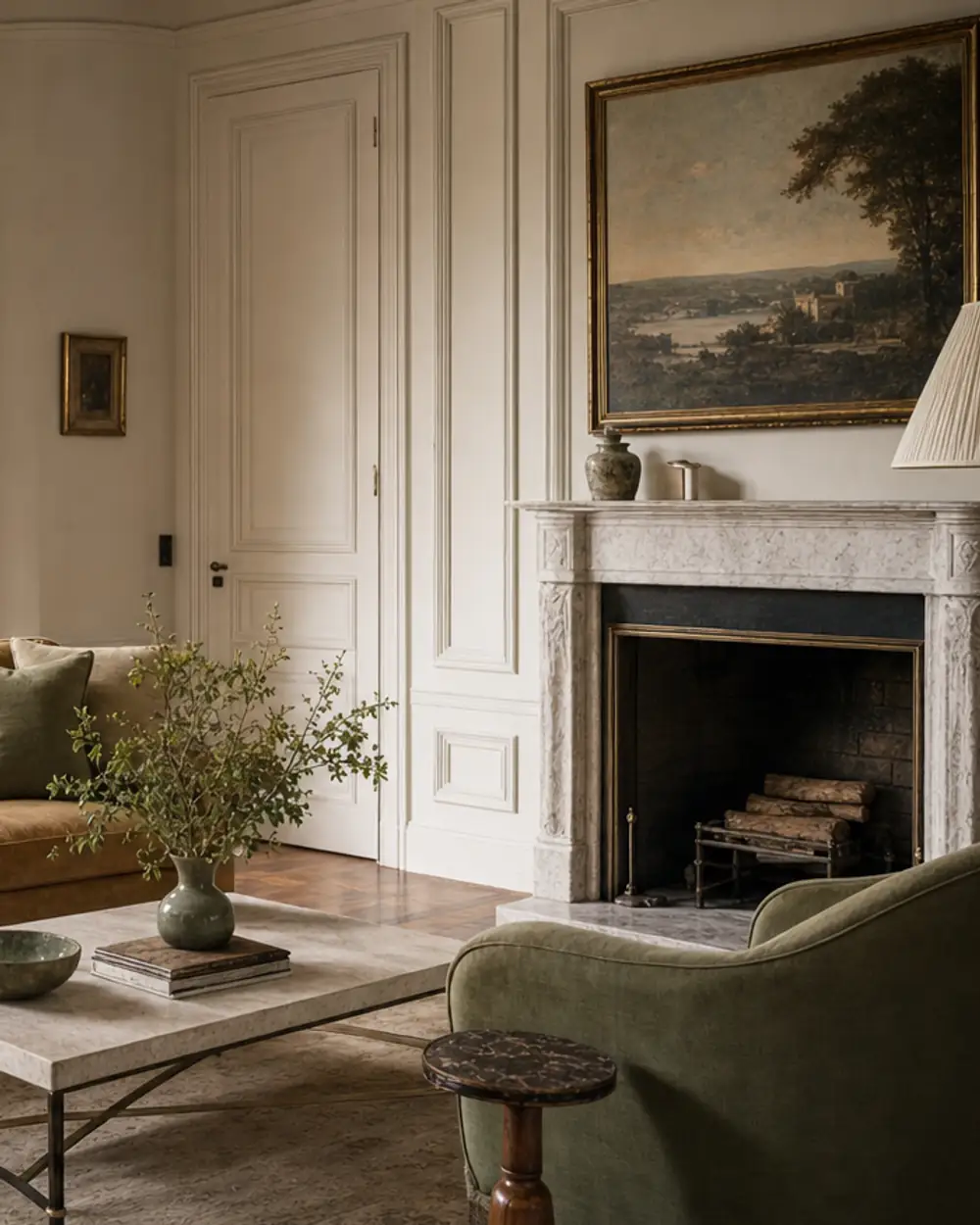
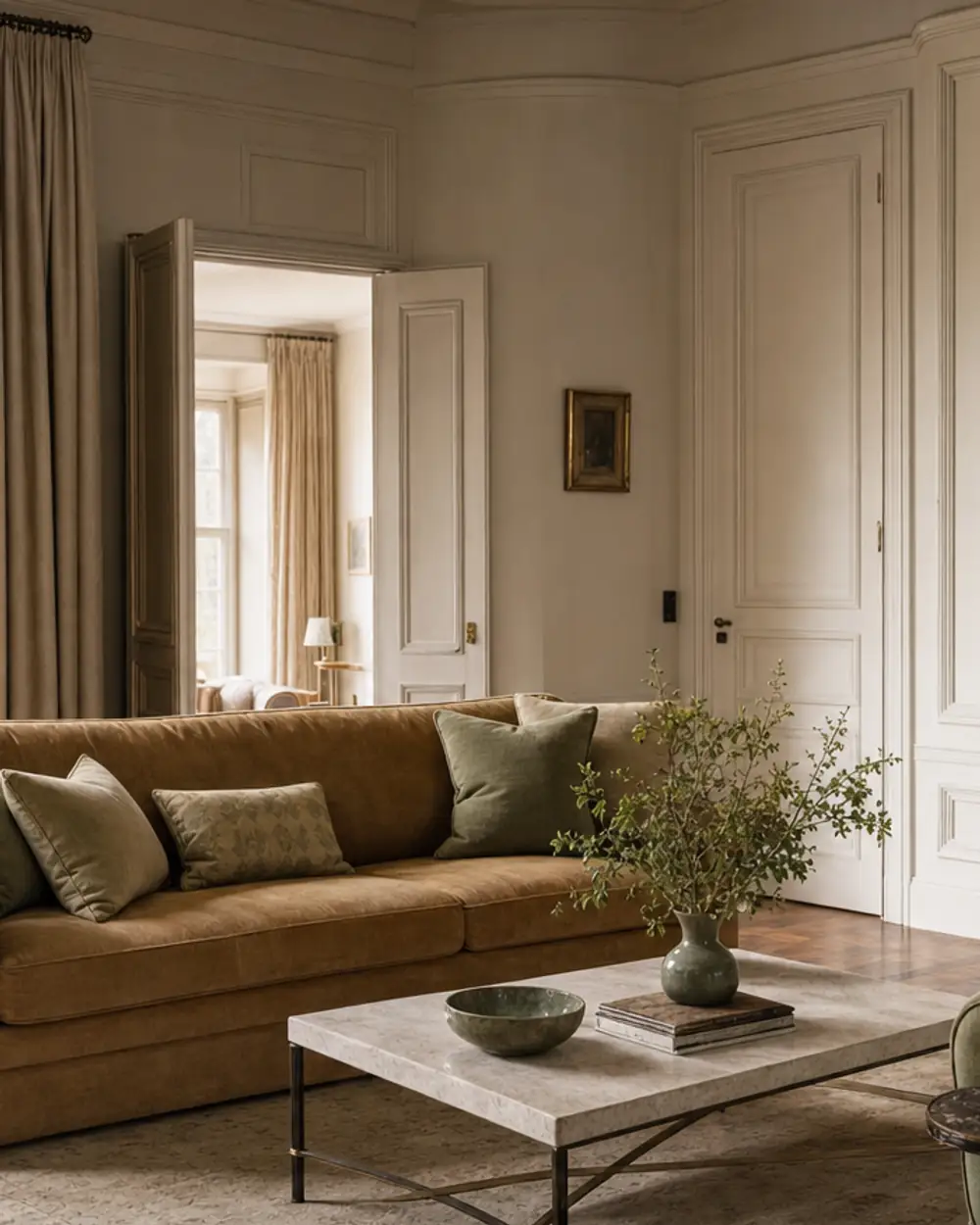
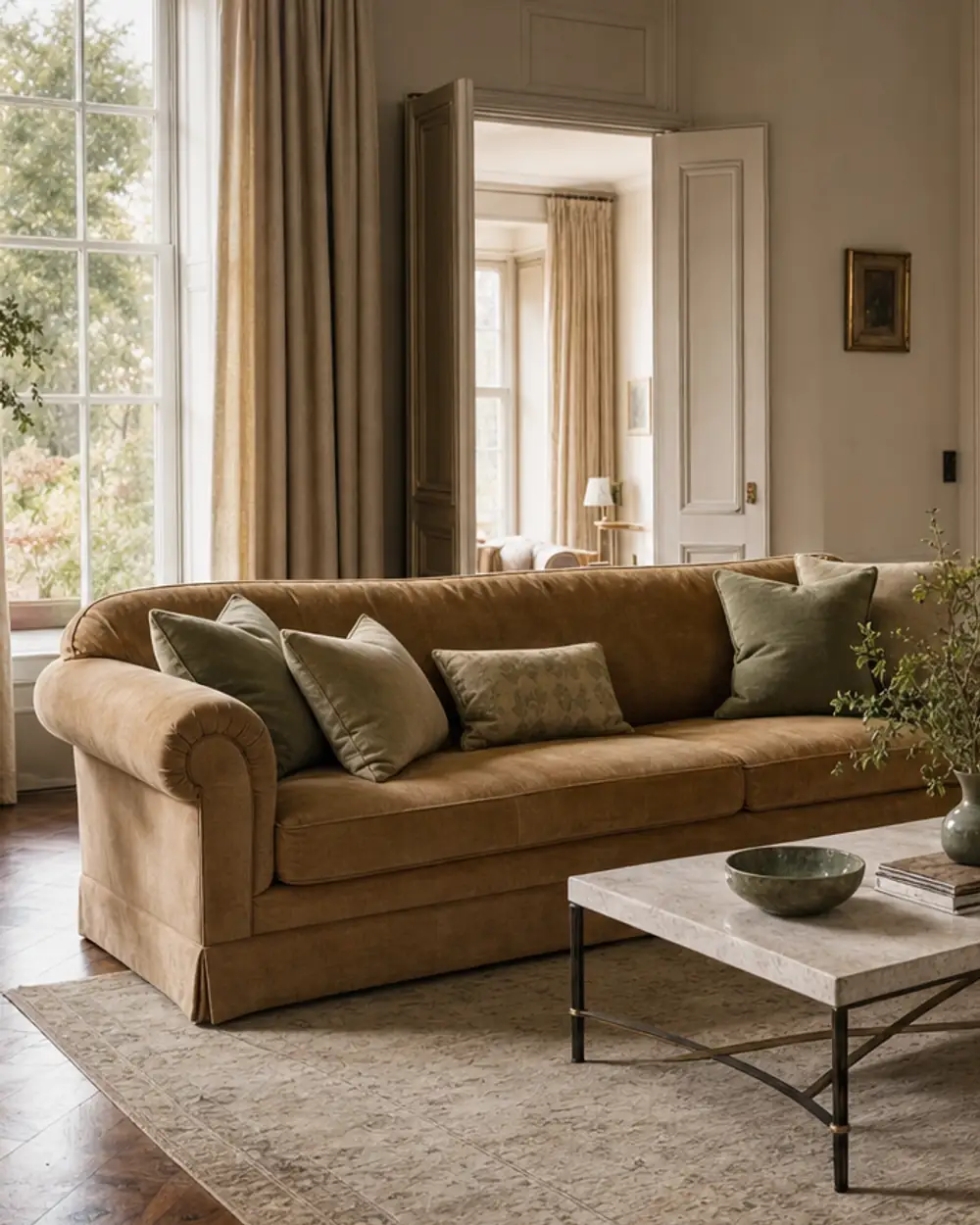
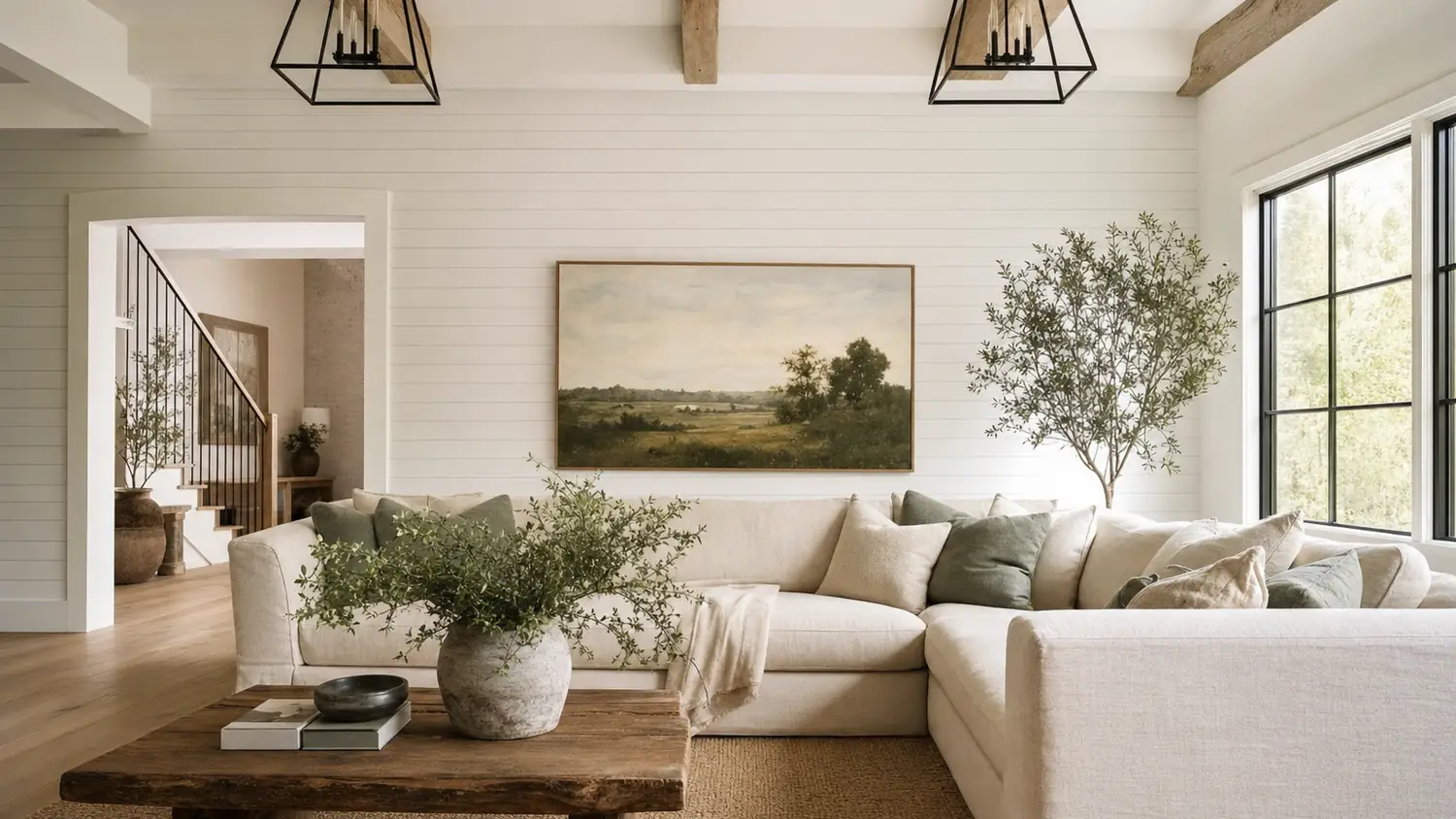
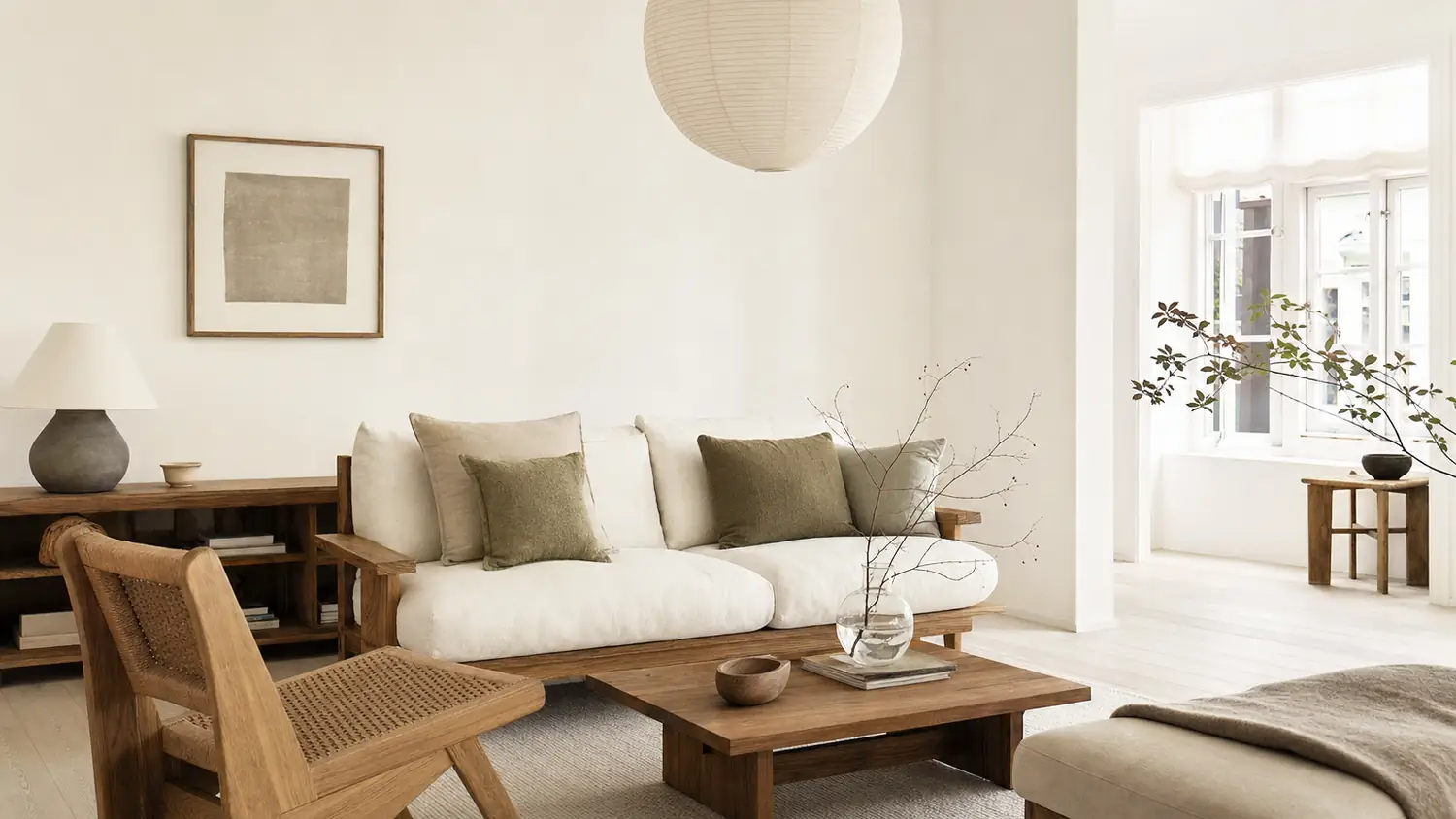
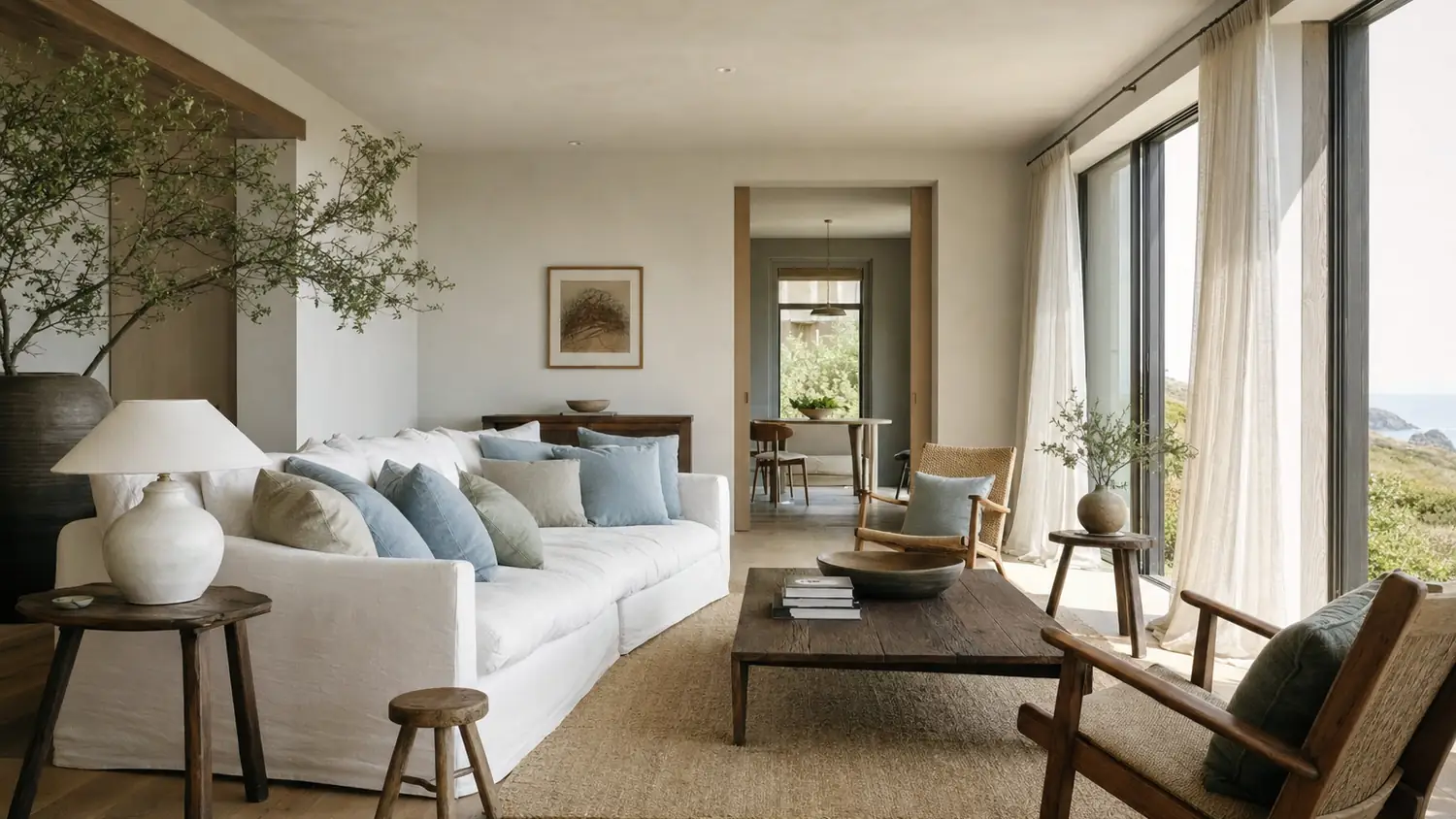
These rooms are illustrations of the style, not photographs of real installations.
The one thing
Walnut, wool, a proper lamp, symmetry where it counts.