
The color bench
Floor tone, wall color, trim
Three floors, each with the walls that flatter them and the trim that keeps the pairing from going muddy. Start with the floor. It is the largest color in the room and the one you are least likely to change.
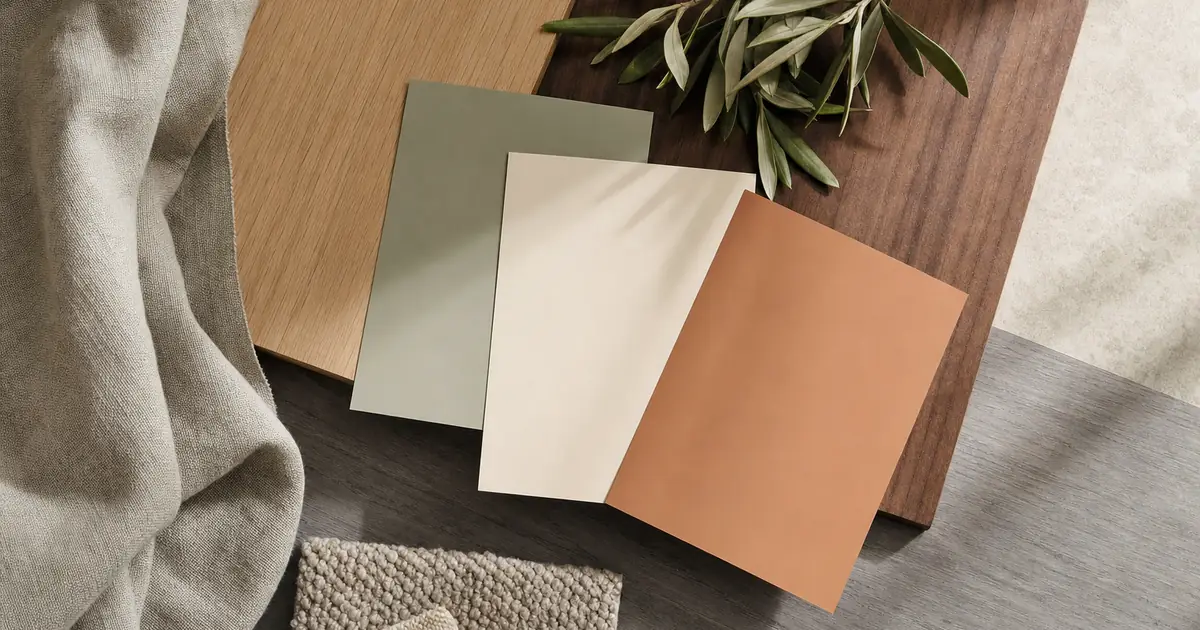
Try it
Change the three planes
Pick a floor, a wall and a trim. The room changes immediately, with no JavaScript and no paint tin.
The long version
Three floors, three temperatures
What each floor does to a wall, what to avoid, and the trim that holds it together.
Light oak
Pale, warm-neutral, yellow-leaning
Light oak is the most forgiving floor in the house, but not neutral. It carries a quiet yellow warmth that flatters cream, sage and stone, and fights any wall with a blue or violet cast.
Works: The safest pairing. Keep the white warm rather than blue, and let the floor supply the color.
Works: Green and pale oak share a vegetable calm. Works in north light; in strong sun it turns softly minty.
Works: A low-contrast, magazine-quiet room. Choose a greige with a green or yellow base, never a pink one.
With care: Blue pushes oak toward orange. Use it only if you want that contrast, and keep the trim warm.
Walnut
Mid-brown, red-leaning, formal
Walnut brings weight and a red-brown undertone. It can carry a stronger wall than oak, and it makes pale trim look crisp. The risk is a room that reads heavy at dusk.
Works: Warm cream lifts the floor without competing. This is the pairing that makes walnut feel airy rather than dark.
Works: Clay and walnut sit in the same warm family. Keep the clay pale so the floor stays the darkest plane.
Works: A library or dining room move. The sand trim keeps the dark wall from sealing the room shut.
With care: Gray against red-brown can look bruised in the evening. Test it with a lamp on, not just daylight.
Gray floor
Cool, low-chroma, contemporary
A gray floor is a cool plane. It makes white walls look cleaner and wood furniture look warmer, but it goes green beside yellow-beige walls and flat beside other grays.
Works: The clean contemporary pairing. Add one warm wood or leather object so the room is not entirely cool.
Works: Sage and gray share a low chroma. It reads calm rather than clinical, especially with linen textiles.
Works: A dark envelope with a cool floor. Keep the ceiling white and the lighting warm.
Avoid: Yellow beige pulls the green out of gray planks and makes both look dirty. Choose cream instead.
Trim
The quietest line in the room
Match the wall, not the floor
Trim painted the same color as the wall, one step lighter, makes a low ceiling feel taller and lets the floor line stay uninterrupted.
Contrast belongs at the edges
A darker trim draws a hard outline around every opening. Use it in rooms with tall ceilings and confident architecture, not in small bedrooms.
Width sets the era
Narrow 2 to 3 inch casing reads modern; 5 inch and wider reads traditional. The color matters less than the proportion.
Sample on the wall, not in the shop
Paint a 12 inch square beside the trim, then look at it at 8am, 2pm and under the lamp you actually use at night.
Before you buy
Test it in the room, not in the shop
Paint a 12 inch square of each candidate directly on the wall, beside the trim, and leave it for two days. Look at it in the morning, in the middle of the afternoon, and at night with the lamp you actually use. Note which one you stop noticing. That is usually the right one.
Do the same with the floor: ask for a full plank or a tile, not a chip. A small sample makes every color look stronger, and a floor is never seen in isolation. Put the sample where the light falls, then put a chair leg on it and see how it reads under furniture.
If the floor is already down and the wall is the question, the room studies show the pairing in a whole room, and the piece on warm and cool undertones explains why two oak floors behave differently under the same paint.
Questions
The four we are asked most
Should trim be lighter or darker than the wall?
Usually lighter, and often the same color as the wall one shade up. A lighter trim makes a low ceiling feel taller and lets the floor line stay uninterrupted. Dark trim draws a hard outline around every opening, which suits tall rooms and confident architecture but can make a small bedroom feel boxed in.
Can I paint a room white if my floor is oak?
Yes, but choose a warm white rather than a blue white. Oak carries a yellow undertone, and a cool white next to it makes the wood look orange and the walls look chalky. A cream or off-white with a little warmth keeps the room calm.
What wall color works with a gray floor?
Sage, soft white and charcoal all work. The risk is yellow-beige: it pulls the green out of gray planks and makes both surfaces look slightly dirty. If you want warmth, use cream rather than beige, and add warmth through wood and textiles instead of the wall.
Do I need to test paint on the wall?
Yes. Paint a 12 inch square beside the trim and look at it at three times of day: morning, mid-afternoon and under the lamp you use at night. A color that looks soft at noon can turn green or gray in artificial light, especially next to a wood floor.
Next
Take the pairing into a room
The room studies put each floor tone under real furniture, with the palette beside it and a floor you can swap.